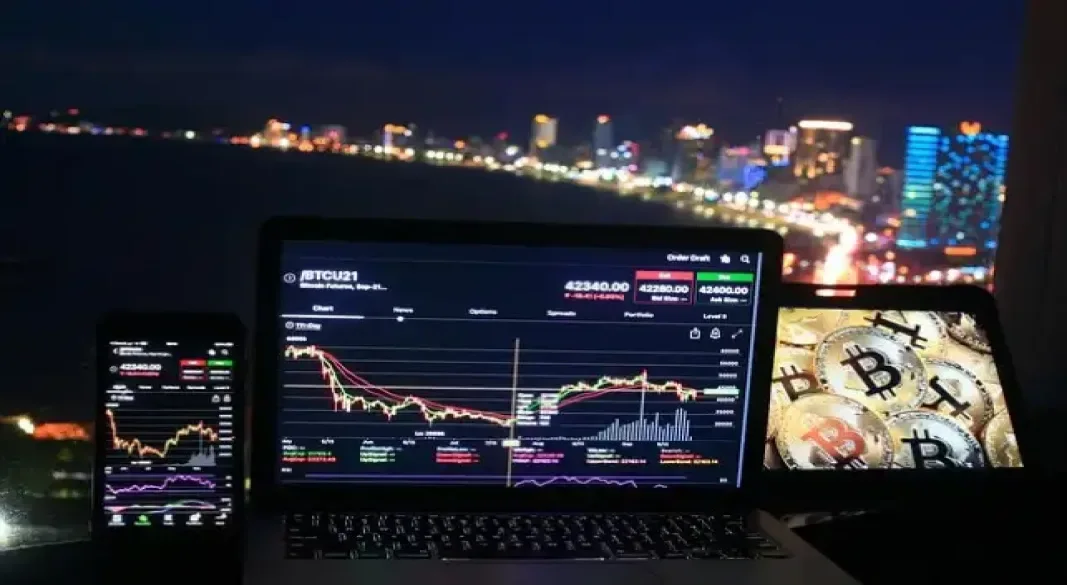
After a turbulent few years marked by high volatility, regulatory crackdowns, and the collapse of several major platforms, the cryptocurrency market is showing signs of a strong rebound in mid-2025.Bitcoin has reclaimed stability above $65,000, while Ethereum is trading confidently near $4,200, signaling renewed investor confidence and growing mainstream adoption.What’s driving the comeback? Experts point to three key factors: institutional investment, regulatory clarity, and technological innovation.
Major financial institutions—including BlackRock, JPMorgan, and Fidelity—have re-entered the market with renewed strategies. This time, they’re focusing on tokenized assets, blockchain-backed bonds, and Bitcoin ETFs that are now officially regulated in the U.S., Europe, and parts of Asia."The noise is gone, and the infrastructure is maturing," says Elena Park, a blockchain analyst at MorganTech Research. "Institutional players are treating crypto not as a gamble, but as a long-term asset class."Even central banks are exploring digital assets. Countries like Singapore, UAE, and Brazil have launched CBDCs (Central Bank Digital Currencies), integrating blockchain into national payment systems.
2025 has seen clearer legal frameworks emerge, especially in the U.S., EU, and Southeast Asia. This regulatory clarity is reducing investor uncertainty and allowing new products—such as crypto-based retirement funds, lending platforms, and tokenized commodities—to enter the market with legal backing.The Crypto Market Stability Act (CMSA) in the U.S. has also introduced mandatory reserves for stablecoins, stricter KYC/AML protocols for exchanges, and real-time audit requirements."Regulation doesn’t kill crypto—it protects it," notes Dr. Omar Hussein, a digital finance professor in London. "Now, institutional and retail investors can participate with more confidence."
While Bitcoin and Ethereum dominate headlines, smaller utility tokens and Layer 2 solutions are making waves. Networks like Arbitrum, Optimism, and Solana have significantly improved transaction speeds and lowered gas fees, making DeFi and NFTs more accessible.Meanwhile, real-world utility tokens tied to carbon credits, music royalties, and real estate assets are finding niche but growing markets.
Despite the rebound, the crypto market isn’t without risks. Geopolitical tensions, cyberattacks, and sudden market corrections remain constant threats. Investors are still haunted by memories of the 2022–2023 crashes and the FTX and Celsius collapses. As a result, risk management and education have become major themes in crypto investment. Exchanges now offer built-in insurance, and educational tools are more robust than ever.
With blockchain integration into everyday finance, from cross-border payments to gaming economies, crypto is evolving beyond speculation. Many believe the next phase will be utility-first, focusing less on price speculation and more on what blockchain technology can do. "This is no longer a gold rush—it’s a tech revolution," says Elena Park. "And this time, the world is watching with sharper eyes and smarter wallets."