A dramatic wave of realignment is sweeping across collegiate athletics, as major programs abandon long-standing conferences in search of lucrative media deals and expanded playoff opportunities. The Big Ten, SEC, and Big 12 have absorbed schools from coast to coast, leaving once-stable institutions like the Pac-12 fractured. These moves are dissolving historic rivalries and reshaping the identity of college sports, sparking backlash from fans and alumni who lament the loss of tradition for the sake of revenue. Athlete Compensation Enters Legal Crosshairs The fight over athlete compensation has reached new legal heights. Ongoing lawsuits and federal reviews are challenging the NCAA’s amateurism model, with growing momentum behind classifying student-athletes as employees. Courts are also examining whether colleges owe athletes additional protections under labor law. The decisions expected in the coming months could open the door for direct salaries, unionization, and broader benefits, potentially redefining the student-athlete experience. Nzme, Image, and Likeness (NIL) Continues to Evolve The NIL era is maturing rapidly, with student-athletes now securing multi-million-dollar endorsement deals and building personal brands through social media and sponsorships. However, the lack of federal regulation has led to inconsistencies across states and programs, creating confusion and competitive imbalance. Schools are scrambling to develop compliance frameworks, while Congress considers national legislation to bring uniformity to NIL rights and prevent further chaos in collegiate recruiting. Governance Reform Sparks Power Struggles As the NCAA faces mounting criticism over its authority and effectiveness, calls for governance reform are intensifying. Some schools and conferences are pushing for a breakaway model that would grant elite programs more autonomy. Others advocate for a decentralized system with regional control and athlete representation. The ongoing debates reflect deeper tensions about who controls college sports—and whether the current system can survive the era of big business and player empowerment. The Future: Toward a Professionalized College Sports Model? These combined shifts are pointing college sports toward a more professionalized future. As legal, financial, and structural pressures build, the once-clear line between amateur and professional athletics continues to blur. Whether through collective bargaining, conference-led governance, or direct payment, the landscape is evolving at a historic pace. What was once student-centered competition is now a billion-dollar industry confronting its identity—and rewriting its rules in real time.

In a moment steeped in franchise heritage, the Washington Commanders announced they will be retiring Hall‑of‑Famer Art Monk’s No. 81 jersey during their Week 9 home game against the Seattle Seahawks. The ceremony will feature "Super Bowl Era" alternate uniforms, a tribute befitting the receiver whose 940 catches and nearly 13,000 receiving yards remain Washington’s all‑time record. As the franchise honours its past, a tense negotiation unfolds in the present. Terry McLaurin, entering the final season of his six‑year, $68 million contract, has publicly voiced frustration over delays in extension talks. With five straight 1,000‑yard seasons behind him, McLaurin insists on compensation befitting an elite NFL receiver. His vocal discontent has sparked concerns among fans and analysts—many urging the front office to resolve the matter before training camp to avoid derailment during the 2025 season. Adding further intrigue, linebacker Frankie Luvu earned recognition as the No. 5 off‑ball linebacker in ESPN's 2025 rankings thanks to an outstanding 2024 campaign featuring eight sacks, 12 tackles for loss, and second‑team All‑Pro honours. Hogs Haven His rise signals that while the Commanders honour legends, new standout performances are reshaping the team’s identity. Legal and competitive landscapes also simmer as the Mountain West and Pac‑12 conferences prepare for litigation over unresolved legal disputes, possibly reshaping college athletics governance. Meanwhile, the "Moneyball" model is making waves—Texas Tech and others are strategically investing to level the playing field, exploring salary caps and compensation structuring, including tactics like backloading deals to stay competitive. The Times of India Hogs Haven The Falcoholic Mountain West Connection Into this evolving narrative, college football continues to produce standout professionals—players like Murf Gray, Jack Anker, and Aidan Cremarosa were recently drafted in the 2025 MLB Draft, underscoring the conference’s rising talent pipeline. Mountain West Connection This convergence of legacy celebration, player valuation, emerging defensive stars, and institutional transformation epitomises a franchise and sport in transition. The Commanders face critical decisions—balancing reverence for legends like Monk with the urgency of retaining top talent like McLaurin and building a competitive roster around rising standouts like Luvu. As training camps loom, how these storylines unfold—contract resolution, offensive versus defensive leadership, legal disputes in collegiate sport, and institutional competitiveness—will shape the trajectory not only of the Commanders organisation but also the broader narrative of American football in 2025.

In a heart-stopping finish to Game 1 of the 2025 NBA Finals, Tyrese Haliburton lifted the Indiana Pacers to a stunning 111–110 victory over the Oklahoma City Thunder. Haliburton's 21-foot pull-up jumper with just 0.3 seconds left gave Indiana its first and only lead of the night, silencing a roaring crowd at the Paycom Center and delivering a signature moment in what’s shaping up to be a historic series.Oklahoma City appeared in full control for most of the night, spearheaded by MVP finalist Shai Gilgeous-Alexander, who tallied 38 points in a dazzling offensive display. The Thunder built a 15-point lead early in the fourth quarter, only to unravel under pressure. Critical turnovers and missed opportunities allowed the Pacers to mount a comeback that flipped the script in the game’s final minutes. Pacers Capitalize on Turnovers, Mount Relentless Comeback The turning point came in the second half, where the Pacers outscored the Thunder 66–45. Indiana forced 25 turnovers—the most in an NBA Finals game this century—and turned them into high-efficiency transition offense. Myles Turner, Obi Toppin, and Aaron Nesmith hit clutch three-pointers that swung the momentum, while Haliburton orchestrated the offense with poise and confidence. The win marks Indiana’s third consecutive Game 1 road victory this postseason, a testament to the team’s resilience and composure under pressure. Their ability to seize late-game moments has become a defining trait, fueling optimism that the franchise could be on the verge of its first-ever NBA title. Game 2 Looms Large for Thunder The Thunder will have little time to regroup before Game 2, scheduled for Sunday, June 8, at 8 p.m. ET. Playing again at home, Oklahoma City faces a crucial opportunity to level the series. Head coach Mark Daigneault will need answers to the Pacers' defensive pressure and late-game execution if the Thunder hope to bounce back.Despite the thrilling nature of the game, it failed to capture national attention. Game 1 recorded the lowest TV ratings for an NBA Finals opener in 37 years, raising concerns about the league’s waning mainstream appeal—particularly with two smaller-market teams competing on the biggest stage. Momentum vs. Redemption: What’s Next in the Finals? As the series unfolds, the question remains: Can Indiana maintain its momentum and continue its underdog run toward a championship, or will Oklahoma City regroup and reignite its title ambitions? With both teams hungry for their first title in decades—or ever—the stage is set for a Finals that could defy expectations, both on the court and in the league’s broader narrative.
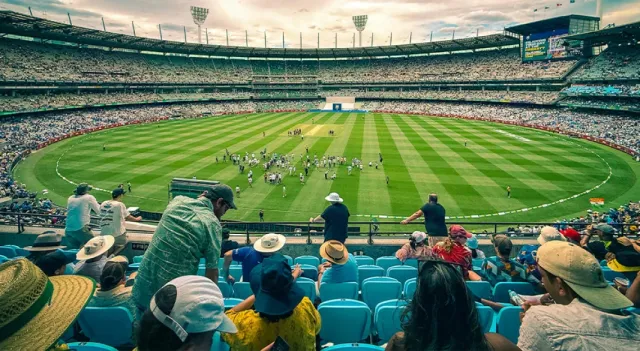
2027 Cricket World Cup: Africa's Grand Cricketing Showcase The 2027 Cricket World Cup, set to be hosted jointly by South Africa, Namibia, and Zimbabwe, promises to be a landmark event for global cricket and a celebration of African sportsmanship. This will mark the first time since 2003 that the tournament returns to the continent, bringing fresh excitement and a chance to showcase world-class infrastructure and hospitality. With a 48-match schedule, the tournament will feature 14 international teams, including cricketing powerhouses like India, Australia, and England, as well as emerging nations eager to make their mark. Highlights of the 2027 World Cup: Expanded Format: The return to a 14-team structure offers more matches and better competition than recent editions. African Venues: Iconic stadiums like Newlands in Cape Town, Harare Sports Club, and Wanderers in Johannesburg will host crucial games. Focus on Youth & Growth: Associate nations like Namibia will benefit from increased global exposure, inspiring future generations. Tech Integration: Advanced DRS systems, AI-powered analytics, and smart ticketing promise a smoother fan experience. Cultural Impact: The tournament will also spotlight African music, cuisine, and heritage, making it a celebration beyond cricket. The 2027 edition is more than a tournament—it's an opportunity for Africa to shine on a global stage, blending sports excellence with cultural richness and redefining the future of international cricket.

The 2026 FIFA World Cup will be a historic event, marking the first time the tournament is hosted by three countries: the United States, Canada, and Mexico. A total of 16 cities have been selected to host matches, with the majority taking place in the U.S. Notably, Mexico City's Estadio Azteca is set to host the opening match on June 11, 2026. The stadium is undergoing significant renovations to enhance facilities and increase capacity to 90,000 spectators. Expanded Tournament Format The 2026 World Cup will feature an expanded format with 48 teams, up from the previous 32. Teams will be divided into 12 groups of four, with the top two from each group, along with the eight best third-placed teams, advancing to a 32-team knockout stage. This expansion aims to increase global representation and competitiveness. High-Profile Managers Take the Helm A notable trend for the upcoming World Cup is the appointment of high-profile club managers to national teams. Carlo Ancelotti has taken charge of Brazil, while Thomas Tuchel leads England. Other prominent appointments include Julian Nagelsmann for Germany and Mauricio Pochettino for the USA. These strategic moves reflect a shift in the perception of international management roles, now seen as prestigious and impactful. Qualification Highlights The qualification rounds have produced some surprising results. Norway delivered a commanding 3-0 victory over Italy, significantly impacting Italy's qualification hopes. The match featured a notable celebration by Erling Haaland and Martin Ødegaard, paying homage to Arsenal legend Thierry Henry. Sustainability and Innovation Host cities are emphasising sustainability and technological innovation in their preparations. Initiatives include the integration of renewable energy sources, advanced waste management systems, and the implementation of smart stadium technologies to enhance the fan experience.
Manchester City midfielder Kevin De Bruyne said he is unlikely to play at the Club World Cup due to concerns about picking up an injury ahead of his departure from the club.

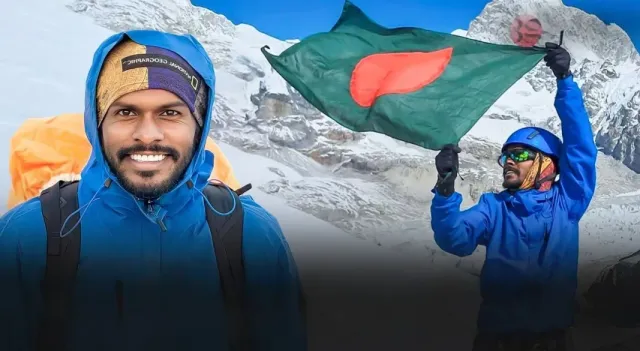
In a truly awe-inspiring feat of human endurance, willpower, and national pride, Shakil, born on April 17, 1994, has made history by becoming the youngest and fastest individual to complete the legendary ‘Sea to Summit Everest’ challenge. Over the course of 90 relentless days, he traveled an extraordinary distance of 1,300 kilometers, starting from sea level and pushing onward until he reached the summit of Mount Everest, the highest point on Earth at 8,848.86 meters. This rare expedition, known for its immense physical and psychological demands, requires athletes to endure punishing terrain, extreme altitude, unpredictable weather, and the constant threat of exhaustion or injury. Shakil’s journey wasn't just a personal conquest—it is a symbolic victory for his country, putting it on the global map for adventure and high-altitude achievements. His success reflects grit, precise planning, and relentless preparation, combining long-distance endurance trekking, elite-level climbing, and sheer mental strength. From humid coastal regions, through dense forests and rocky trails, across snow-covered landscapes, and finally to the icy slopes of Everest, Shakil’s accomplishment is nothing short of heroic. Highlights of Shakil's Historic Journey: 1,300 km covered on foot and climb from sea level to Everest’s peak 90 days of non-stop effort, crossing multiple terrain zones Technical climbs, glacial crossings, and high-altitude acclimatization Recognition as the youngest and fastest ‘Sea to Summit Everest’ finisher landmark achievement for his nation, inspiring youth and mountaineers alike This unprecedented triumph now stands as a beacon of inspiration for aspiring adventurers across the world. Shakil’s journey proves that with vision, resilience, and courage, even the most extreme goals are within reach. His legacy will not only be remembered in mountaineering history but will continue to motivate generations to come.

In a situation that escalated into a major logistical crisis, hundreds — possibly over a thousand — trucks carrying India-bound goods were either stranded for long hours or turned away without unloading their cargo at multiple land ports across Bangladesh. The affected border points included Benapole, Burimari, Bhomra, Hili, Akhaura, and Sonamasjid, among others. These trucks had been waiting in queue for clearance, only to face confusion, delays, and in many cases, forced return without explanation. This sudden breakdown in port operations has raised alarms across the trading community. Exporters and Freight Operators Facing Mounting Economic Fallout The economic cost of the disruption has been immediate and severe. Exporters, many of whom operate on tight schedules, reported contracts being delayed, perishable goods nearing spoilage, and logistics costs surging. Small and medium-scale traders are especially vulnerable, with some reporting losses of lakhs of taka per shipment. Freight companies have also decried the lack of information and planning, as they lose revenue on idle transport, incur fuel and labor costs, and face penalties for late deliveries on both sides of the border. Absence of Clear Directives from Authorities Fuels Frustration and Speculation Adding to the chaos is the near-total silence from port and customs authorities. No formal statements were issued to explain the disruption, leading to speculation among drivers, transporters, and business owners. Some unofficial sources attributed the jam to technical faults in the customs software, shortages of port staff, or changes in clearance protocols, but these remain unconfirmed. The lack of transparency has left stakeholders in a state of panic, confusion, and rising anger. Bilateral Trade Between Bangladesh and India Suffers Another Blow This incident marks yet another challenge in the already fragile Bangladesh-India trade infrastructure, where efficiency and predictability are often compromised by poor coordination. Indian buyers have voiced concerns over the "unreliable nature" of port operations on the Bangladeshi side, while Bangladeshi exporters warn that such delays undermine trust in future trade agreements. With annual bilateral trade worth billions of dollars, stakeholders fear that repetitive disruptions could result in a shift of business to alternative routes or suppliers. Businesses Demand Urgent Reform and Government-Level Intervention As frustration boils over, national trade bodies such as the Bangladesh Truck-Covered Van Owners Association, and the Exporters’ Association of Bangladesh, have called for immediate government action. Their demands include: Deployment of emergency clearance teams at border ports Digitization of customs operations to reduce delays Creation of a real-time port status monitoring system Better bilateral coordination mechanisms with Indian port authorities Investment in modernizing land port infrastructure to handle high volumes efficiently Without a structured, long-term solution, business leaders warn that this disruption is just a preview of more severe economic consequences to come, particularly as Bangladesh aims to expand its export base and attract more regional trade.
The U.S. Supreme Court issued a landmark ruling on Monday, declaring that former presidents are entitled to partial immunity from criminal prosecution for actions taken while in office. The 6-3 decision, split along ideological lines, has triggered intense political and legal debate across the country.The ruling stems from charges brought against former President Donald Trump, who has faced multiple indictments related to alleged interference in the 2020 presidential election and events surrounding the January 6 Capitol riot. The Court’s decision now makes it more difficult for prosecutors to pursue charges for actions deemed as part of a president's official duties. Divided Reactions President Joe Biden responded to the ruling by calling it a “dangerous precedent” that could place future presidents above the law. “No one in America should be beyond accountability,” he said during a press conference.Republican leaders, however, welcomed the decision. House Speaker Steve Scalise stated, “This ruling upholds the constitutional separation of powers and protects the office of the presidency from political attacks.”The recent Supreme Court ruling on presidential immunity has ignited intense debate across the United States, with sharp divisions emerging among legal experts, lawmakers, and the public. The decision, which sets new boundaries on the legal protections afforded to sitting presidents, has far-reaching implications for the balance of power and accountability in government. Supporters argue that the ruling upholds the integrity of the executive office by protecting it from politically motivated prosecutions, while critics warn that it could open the door to unchecked presidential authority. What the Ruling Means The Court ruled that while presidents do not have absolute immunity, they are shielded from criminal prosecution for actions that are “within the outer perimeter of official presidential responsibilities.” However, personal or unofficial actions remain subject to prosecution.Legal experts say the ruling could delay several of Trump’s ongoing legal cases, potentially impacting the 2024 election season, where Trump remains the leading Republican contender. As protests, press conferences, and panel discussions erupt nationwide, the ruling is expected to influence upcoming elections and reshape the legal landscape surrounding executive power for years to come. Public Response The recent Supreme Court ruling on presidential immunity has ignited intense debate across the United States, with sharp divisions emerging among legal experts, lawmakers, and the public. The decision, which sets new boundaries on the legal protections afforded to sitting presidents, has far-reaching implications for the balance of power and accountability in government. Supporters argue that the ruling upholds the integrity of the executive office by protecting it from politically motivated prosecutions, while critics warn that it could open the door to unchecked presidential authority. As protests, press conferences, and panel discussions erupt nationwide, the ruling is expected to influence upcoming elections and reshape the legal landscape surrounding executive power for years to come.
Football’s rulemakers are pushing for sweeping change ahead of the 2026 FIFA World Cup, redefining how penalties and VAR decisions are adjudicated in high-stakes matches. The centerpiece proposal: abolish penalty rebounds. Under the new rule, once a penalty kick is taken—regardless of outcome—play would end immediately. Any rebound off the keeper or post ends in a goal kick awarded to the defensive team. Proponents say this mirrors shoot-out clarity, resolves VAR encroachment retakes, and reduces contentious second-chance controversy. Talk Sport Channel In a startling revelation, the CEO of a prominent "rent-a-crowd" agency has lifted the lid on the booming U.S. protest industry, exposing how political movements, corporate interests, and influencers routinely pay to stage large-scale demonstrations. Speaking anonymously, the executive detailed how thousands of actors and extras are hired to pose as passionate activists, boosting media coverage and swaying public opinion. From climate rallies to anti-corporate marches, these manufactured protests are meticulously choreographed, with participants receiving scripts, signs, and hourly pay. The disclosure raises serious ethical questions about authenticity in civic movements and the manipulation of democratic discourse. Simultaneously, VAR’s purview may expand significantly: future iterations would allow reviews of second yellow cards and corner-kick decisions, expanding beyond current limits that restrict it to straight red incidents. These changes aim to improve fairness but raise concerns over game flow and the human dynamic on the pitch. Talksport critics, including talkSPORT pundit Alan Brazil, labeled the proposals “a load of tosh,” arguing such regulation shifts remove nuance and over-engineer natural gameplay. Another theoretical change under consideration—Arsène Wenger’s “daylight offside rule”—would require attackers to be fully separated from defenders to be ruled onside, increasing objectivity but potentially changing traditional offside dynamics. Talksport These reforms also address double-touch penalties, stipulating retakes rather than awarding goals where infringement occurs, such as the incident with Julian Álvarez in last season’s Champions League. All measures are subject to ratification by February 2026 to take effect during the World Cup. Talksport. Should these rule changes pass, they would redefine football officiating—from grassroots leagues adopting new penalty protocols to elite matches experiencing altered stoppage patterns and VAR triggers.The potential implications are vast: strategic behavior, coach tactics during penalty sequences, and player conduct under intensified replay scrutiny could all shift. With the World Cup on the horizon, football’s global governing body may soon pivot action from debate to implementation.
The Smart Way to See the World: How AI Is Revolutionizing Travel In an age where time is precious and wanderlust runs deep, artificial intelligence (AI) is becoming the ultimate travel companion. Gone are the days of juggling dozens of browser tabs, flipping through outdated guidebooks, or relying on guesswork. In 2025, planning a trip is as effortless as asking the right question—and letting AI do the rest. From the way we search for destinations to how we experience them in real time, AI is reshaping travel into something smarter, faster, and deeply personal. Here’s how it’s changing the game: Personalized Planning at Lightning Speed AI takes your travel preferences—budget, travel style, past trips, and even your online behavior—and instantly curates custom itineraries. Whether you're a solo backpacker or a family planner, platforms like Google Travel and Hopper analyze real-time data to recommend the best times to fly, where to stay, and what to do—tailored just for you. Need to change a flight, book a last-minute hotel, or file a baggage complaint? AI-powered chatbots now handle customer service around the clock—no more hold music or call center frustration. These virtual agents respond in seconds, speak your language, and are trained to solve real issues efficiently. Seamless Experiences Beyond Booking AI continues to assist even after you’ve boarded the plane. From live translation apps and AR-guided tours to facial recognition at airports, tech-enhanced journeys are smoother and more immersive. Your smartphone becomes your personal concierge, navigator, and translator—all powered by intelligent systems. While AI makes travel more efficient, it hasn’t replaced the value of human intuition. For complex trips or once-in-a-lifetime experiences, many still trust human travel advisors. But for most travelers, AI offers freedom from stress and planning fatigue—without losing the joy of discovery. The Future Is Here AI isn’t just helping us travel—it’s redefining how we connect with the world. With smart tools at your side, the hardest part of your next adventure might just be deciding where to go.
In an increasingly visual world, photography has evolved far beyond a hobby—it has become a powerful tool of connection, identity, and even resistance. From the alleyways of Marrakech to the streets of Tokyo, people around the globe are using photography to capture their realities, share their truths, and reimagine how we see the world. In 2025, the art of photography is no longer limited to professionals or those with expensive equipment. With powerful cameras embedded in nearly every smartphone and editing apps accessible to all, the global population has become a generation of storytellers. A New Language of Expression Photography has become the most universal visual language—transcending borders, politics, and even spoken words. A single image can spark movements, ignite conversations, and bring attention to marginalized voices. From the war-torn zones of Gaza and Ukraine to peaceful protests in Europe and climate marches in South America, everyday citizens are documenting history in real time. These raw, unfiltered images often make their way to global audiences faster than traditional news media. "The smartphone is the new pen," says French photojournalist Camille Laurent. "People don’t just take photos—they share their worldviews." The Rise of Visual Identity In cities like New York, Seoul, and Berlin, photography has become deeply intertwined with personal branding. On platforms like Instagram and Threads, visuals are the currency of influence. Whether it’s fashion, travel, activism, or mental health, photography is the lens through which individuals craft and project their identity. This has also sparked a global aesthetic—where minimalist cafes in Istanbul resemble those in Paris, and sunlit "golden hour" selfies are universal. Yet within this visual sameness, cultural uniqueness is also being celebrated. Photographers are reclaiming their heritage—using traditional attire, rural landscapes, and local rituals to tell stories that challenge stereotypes and global homogenization. AI, Ethics & The Future As artificial intelligence blends with photography, questions of ethics and authenticity are surfacing. AI-generated portraits and edited realities raise concerns about truth, body image, and media manipulation. Yet, at the same time, AI tools are empowering more people to create stunning visuals without formal training—democratizing creativity in ways never imagined. "We’re entering an era where the line between photography and digital art is blurring," notes Japanese visual artist Rei Nakamura. "But the emotion behind the image still matters most." A Global Bond In refugee camps in Jordan, schoolchildren are given disposable cameras to capture their lives. In Scandinavian forests, nature photographers use drones to document wildlife. On African coastlines, photographers are preserving indigenous stories that were never written down. Despite the diversity of context, one thing is clear: photography connects humanity. It offers empathy. It builds bridges. In the words of American photographer Dorothea Lange, "Photography takes an instant out of time, altering life by holding it still." And today, more than ever, the world is watching—frame by frame.
Hidden Gems in Southeast Asia You’ve Never Heard Of While millions flock to Southeast Asia every year to explore tourist magnets like Bali, Bangkok, and Halong Bay, the region also hides a treasure trove of lesser-known destinations waiting to be discovered. In 2025, as more travelers seek authentic, off-the-beaten-path experiences, these hidden gems are gaining quiet popularity. These spots offer untouched landscapes, rich local cultures, and fewer crowds—ideal for travelers craving depth, solitude, and meaningful adventures. Here are some of Southeast Asia’s best-kept secrets that deserve a place on your next itinerary: Ban Gioc Waterfall, Vietnam Tucked away on the northern border of Vietnam, Ban Gioc Waterfall is one of the most breathtaking natural wonders in Asia—yet remains largely unknown to international tourists. Surrounded by lush limestone mountains and rice paddies, this massive waterfall straddles the border with China and offers a peaceful, untouched atmosphere. Visitors can take bamboo rafts near the base, explore nearby caves, and immerse themselves in the slow-paced rural life of Cao Bang Province. While Langkawi and Penang steal the spotlight, Bagan Lalang is a serene coastal village just an hour from Kuala Lumpur that offers calm beaches, seafood feasts, and spectacular sunsets without the tourist crowds. It’s the perfect weekend escape for travelers seeking local charm and affordable luxury. The overwater villas here provide a unique stay experience, and nearby mangrove forests offer eco-tourism activities like kayaking and birdwatching. Champasak, Laos Nestled along the Mekong River in southern Laos, Champasak is a tranquil town rich in history and spiritual beauty. Home to the ancient Khmer temple complex of Wat Phou—a UNESCO World Heritage Site often compared to Angkor Wat but with far fewer tourists—Champasak offers a unique window into Southeast Asia’s pre-Angkorian past. The town is also known for its French colonial architecture, riverside cafes, and laid-back pace of life. Often overshadowed by Boracay and Palawan, Siquijor is a mystical island in the central Philippines famous for its folklore, healing traditions, and crystal-clear waters. With hidden waterfalls, white-sand beaches, coral reefs, and firefly-filled mangrove forests, the island offers a magical blend of nature and local legend. Visitors can snorkel, motorbike across the island, or even visit traditional healers known as “mambabarang.” Tumpak Sewu, Indonesia Often called the “Niagara Falls of Indonesia,” Tumpak Sewu is a stunning horseshoe-shaped waterfall located in East Java, surrounded by jungle cliffs and volcanic terrain. Unlike the more visited Mount Bromo or Bali beaches, this hidden paradise requires a trek through dense forest and river crossings—making the reward even more satisfying. It’s ideal for adventurers, photographers, and anyone wanting to experience Indonesia’s raw natural power up close. Located at the southernmost tip of Myanmar, Kawthoung is a quiet port town and the gateway to the unspoiled Mergui Archipelago—an island chain of over 800 largely untouched islets. The area is ideal for sailing, diving, and discovering secluded beaches that feel truly remote. With few visitors and an emerging eco-tourism scene, Kawthoung remains one of the last frontiers for explorers looking for solitude and oceanic beauty. In Summary Southeast Asia continues to surprise travelers with its diversity, depth, and hidden wonders. As the travel landscape evolves, these lesser-known destinations are proving that you don’t need crowds or famous landmarks to have an unforgettable experience. Whether you're seeking nature, culture, adventure, or reflection—these secret spots offer the essence of Southeast Asia in its purest, most authentic form.