Retail is no longer just about selling products—it’s about creating seamless, intelligent, and connected shopping experiences. From boutique stores in Paris to roadside stalls in Nairobi, businesses are upgrading to smart Point-of-Sale (POS) systems to stay competitive, efficient, and customer-focused. Once just a cash register, the POS system has evolved into a powerful business engine—offering everything from inventory tracking and digital payments to customer relationship management and real-time analytics. "POS systems today are more than tools—they’re business partners," says Jenna Raines, a retail technology consultant in San Francisco. "They help shop owners make better decisions, reduce loss, and scale with confidence." Retail Gets a Digital Brain Modern cloud-based POS platforms like Square, Shopify POS, Lightspeed, and Toast are turning small retail stores, restaurants, and service providers into tech-savvy businesses. These systems now allow for: Real-time inventory tracking Multi-location sales syncing Digital invoicing & receipts Customer loyalty programs Sales trend forecasting QR-based and contactless payments Even micro-businesses, such as food trucks or mobile vendors, are using portable POS devices with mobile data connectivity to track sales and accept digital payments on the go. Smarter Customers, Smarter Shops Today’s customer expects speed, personalisation, and convenience. POS systems now store customer preferences, purchase history, and offer loyalty rewards automatically—creating a more personalised shopping journey. "A good POS helps us know our customers better," says Niko Choi, owner of a lifestyle store in Seoul. "It tells us what’s selling, who’s buying, and what they’ll likely want next." Bridging Offline and Online With the global boom in omnichannel retail, businesses are using POS systems to integrate in-store sales with their e-commerce platforms. Whether customers buy online, pick up in-store, or return an item at a different location, the system syncs all data in one place. This unified experience is key to building trust, especially in competitive markets like fashion, electronics, and speciality foods. Data-Driven Decision-Making In 2025, running a shop without data is like sailing without a compass. POS analytics now help business owners track best-selling products, slow-moving stock, profit margins, and peak shopping hours—all visualised in clean dashboards. "I used to guess how much stock to reorder," says Maria Fernandez, a shop owner in Buenos Aires. "Now, my POS tells me exactly when and how much to restock." Security, Scalability, and Speed Modern POS systems come with robust data protection, employee access controls, and cloud backups. They also scale easily—from one stall to multiple branches—without needing to overhaul infrastructure. Thanks to mobile compatibility and offline syncing, business doesn't stop even when the internet drops. The Future of POS: AI, Automation, and Voice The next generation of POS systems will include AI-powered suggestions, automated inventory reordering, and even voice-activated checkout. Some are testing facial recognition for loyalty identification and augmented reality displays for product demos. As businesses adopt these technologies, customer experience is set to become faster, smarter, and more immersive. The point of sale is no longer just the end of the customer journey—it’s the core of smart business strategy. In a world where every sale counts, the right POS system can be the difference between staying afloat or scaling up. "It’s not just about selling anymore," says Jenna. "It’s about selling smart."

Five years after the COVID-19 pandemic forced companies to rethink how and where we work, the ripple effects are still shaping business models around the world. From Fortune 500 corporations in New York to tech startups in Nairobi, businesses are shifting toward hybrid work—creating a balance between office collaboration and remote flexibility. What was once a temporary survival strategy has evolved into a long-term cultural transformation. Today, flexible work is no longer seen as a perk—it’s an expectation. Work Without Borders Companies are no longer confined by geography when hiring talent. Businesses in London now employ designers in the Philippines, developers in Argentina, and marketers in Kenya. This global workforce expansion has allowed small businesses to scale faster and large enterprises to tap into more diverse skill pools. "We hire for talent, not time zones," says Michelle Tan, CEO of a Singapore-based e-commerce platform. "Remote work has made our company more inclusive, agile, and cost-effective." Office Space Reinvented As remote work continues, traditional office spaces are undergoing massive change. Instead of cubicles and corner offices, businesses are investing in collaborative hubs, co-working partnerships, and experience-based workspaces. Real estate experts in major cities like Toronto, Amsterdam, and Dubai are seeing an increase in "hot desks" and pop-up offices—flexible spaces where employees can meet only when needed. This shift has allowed companies to significantly reduce overhead costs, freeing up capital to invest in innovation, training, and employee well-being. Challenges of the New Normal Despite their advantages, hybrid work models are not without challenges. Work-life balance, digital burnout, and communication gaps remain key concerns. Companies are now investing in digital wellness programmes, asynchronous communication tools, and regular off-site team bonding retreats. "The future of work is not just remote—it’s human-centred," says Luca Moretti, an organisational psychologist in Milan. "Businesses that focus on trust, flexibility, and mental health will thrive." Technology at the Core Cloud systems, AI-driven productivity tools, virtual collaboration platforms, and digital performance tracking are now the backbone of the modern business ecosystem. Platforms like Slack, Notion, Zoom, and Microsoft Teams have become standard tools, while innovations in virtual reality are paving the way for immersive remote meetings and training. Meanwhile, cybersecurity has emerged as a top priority. As data becomes more distributed, companies are investing heavily in secure cloud infrastructure and employee training. Looking Ahead The global business landscape in 2025 is marked by adaptability, decentralisation, and digital transformation. While industries like manufacturing and logistics may still require physical presence, the broader trend is clear: the office is no longer a place—it’s a network. Businesses that embrace this evolution are not just surviving—they're thriving. "It’s not about where we work," Michelle adds. "It’s about how we grow, how we lead, and how we stay connected."

Iran and Israel traded further air attacks on Thursday as President Donald Trump kept the world guessing about whether the United States would join Israel's bombardment of Iranian nuclear facilities. Google News LinkFor all latest news, follow The Daily Star's Google News channel. A week of Israeli air and missile strikes against its major rival has wiped out the top echelon of Iran's military command, damaged its nuclear capabilities and killed hundreds of people, while Iranian retaliatory strikes have killed two dozen civilians in Israel. Iran and Israel traded further air attacks on Thursday as President Donald Trump kept the world guessing about whether the United States would join Israel's bombardment of Iranian nuclear facilities. Guardian council warns US of 'harsh response A key Iranian body warned the United States on Thursday that any intervention in support of its ally Israel would be met with a "harsh response". "The criminal American government and its stupid president must know for sure that if they make a mistake and take action against Islamic Iran, they will face a harsh response from the Islamic Republic of Iran," the Guardian Council said in a statement carried by state television. Google News LinkFor all latest news, follow The Daily Star's Google News channel. A week of Israeli air and missile strikes against its major rival has wiped out the top echelon of Iran's military command, damaged its nuclear capabilities and killed hundreds of people, while Iranian retaliatory strikes have killed two dozen civilians in Israel. Guardian council warns US of 'harsh response' if it intervenes. A key Iranian body warned the United States on Thursday that any intervention in support of its ally Israel would be met with a "harsh response". "The criminal American government and its stupid president must know for sure that if they make a mistake and take action against Islamic Iran, they will face a harsh response from the Islamic Republic of Iran," the Guardian Council said in a statement carried by state television.

In a heart-stopping finish to Game 1 of the 2025 NBA Finals, Tyrese Haliburton lifted the Indiana Pacers to a stunning 111–110 victory over the Oklahoma City Thunder. Haliburton's 21-foot pull-up jumper with just 0.3 seconds left gave Indiana its first and only lead of the night, silencing a roaring crowd at the Paycom Center and delivering a signature moment in what’s shaping up to be a historic series.Oklahoma City appeared in full control for most of the night, spearheaded by MVP finalist Shai Gilgeous-Alexander, who tallied 38 points in a dazzling offensive display. The Thunder built a 15-point lead early in the fourth quarter, only to unravel under pressure. Critical turnovers and missed opportunities allowed the Pacers to mount a comeback that flipped the script in the game’s final minutes. Pacers Capitalize on Turnovers, Mount Relentless Comeback The turning point came in the second half, where the Pacers outscored the Thunder 66–45. Indiana forced 25 turnovers—the most in an NBA Finals game this century—and turned them into high-efficiency transition offense. Myles Turner, Obi Toppin, and Aaron Nesmith hit clutch three-pointers that swung the momentum, while Haliburton orchestrated the offense with poise and confidence. The win marks Indiana’s third consecutive Game 1 road victory this postseason, a testament to the team’s resilience and composure under pressure. Their ability to seize late-game moments has become a defining trait, fueling optimism that the franchise could be on the verge of its first-ever NBA title. Game 2 Looms Large for Thunder The Thunder will have little time to regroup before Game 2, scheduled for Sunday, June 8, at 8 p.m. ET. Playing again at home, Oklahoma City faces a crucial opportunity to level the series. Head coach Mark Daigneault will need answers to the Pacers' defensive pressure and late-game execution if the Thunder hope to bounce back.Despite the thrilling nature of the game, it failed to capture national attention. Game 1 recorded the lowest TV ratings for an NBA Finals opener in 37 years, raising concerns about the league’s waning mainstream appeal—particularly with two smaller-market teams competing on the biggest stage. Momentum vs. Redemption: What’s Next in the Finals? As the series unfolds, the question remains: Can Indiana maintain its momentum and continue its underdog run toward a championship, or will Oklahoma City regroup and reignite its title ambitions? With both teams hungry for their first title in decades—or ever—the stage is set for a Finals that could defy expectations, both on the court and in the league’s broader narrative.

2027 Cricket World Cup: Africa's Grand Cricketing Showcase The 2027 Cricket World Cup, set to be hosted jointly by South Africa, Namibia, and Zimbabwe, promises to be a landmark event for global cricket and a celebration of African sportsmanship. This will mark the first time since 2003 that the tournament returns to the continent, bringing fresh excitement and a chance to showcase world-class infrastructure and hospitality. With a 48-match schedule, the tournament will feature 14 international teams, including cricketing powerhouses like India, Australia, and England, as well as emerging nations eager to make their mark. Highlights of the 2027 World Cup: Expanded Format: The return to a 14-team structure offers more matches and better competition than recent editions. African Venues: Iconic stadiums like Newlands in Cape Town, Harare Sports Club, and Wanderers in Johannesburg will host crucial games. Focus on Youth & Growth: Associate nations like Namibia will benefit from increased global exposure, inspiring future generations. Tech Integration: Advanced DRS systems, AI-powered analytics, and smart ticketing promise a smoother fan experience. Cultural Impact: The tournament will also spotlight African music, cuisine, and heritage, making it a celebration beyond cricket. The 2027 edition is more than a tournament—it's an opportunity for Africa to shine on a global stage, blending sports excellence with cultural richness and redefining the future of international cricket.

The 2026 FIFA World Cup will be a historic event, marking the first time the tournament is hosted by three countries: the United States, Canada, and Mexico. A total of 16 cities have been selected to host matches, with the majority taking place in the U.S. Notably, Mexico City's Estadio Azteca is set to host the opening match on June 11, 2026. The stadium is undergoing significant renovations to enhance facilities and increase capacity to 90,000 spectators. Expanded Tournament Format The 2026 World Cup will feature an expanded format with 48 teams, up from the previous 32. Teams will be divided into 12 groups of four, with the top two from each group, along with the eight best third-placed teams, advancing to a 32-team knockout stage. This expansion aims to increase global representation and competitiveness. High-Profile Managers Take the Helm A notable trend for the upcoming World Cup is the appointment of high-profile club managers to national teams. Carlo Ancelotti has taken charge of Brazil, while Thomas Tuchel leads England. Other prominent appointments include Julian Nagelsmann for Germany and Mauricio Pochettino for the USA. These strategic moves reflect a shift in the perception of international management roles, now seen as prestigious and impactful. Qualification Highlights The qualification rounds have produced some surprising results. Norway delivered a commanding 3-0 victory over Italy, significantly impacting Italy's qualification hopes. The match featured a notable celebration by Erling Haaland and Martin Ødegaard, paying homage to Arsenal legend Thierry Henry. Sustainability and Innovation Host cities are emphasising sustainability and technological innovation in their preparations. Initiatives include the integration of renewable energy sources, advanced waste management systems, and the implementation of smart stadium technologies to enhance the fan experience.

There are some places in the world that don’t look real — where landscapes feel borrowed from dreams and time flows a little slower. Cappadocia, in the heart of Turkey, is one such magical land. Last month, I had the chance to spend a few days exploring its surreal valleys, ancient cave dwellings, and colorful skies, and I’m still not over it. 🎈 Sunrise in the Sky: The Iconic Hot Air Balloon Ride Waking up at 4:30 a.m. may not sound fun on a vacation, but trust me, it’s worth it. As we ascended gently in our hot air balloon, the sky transformed into a canvas of pinks and golds. Floating above the fairy chimneys and undulating hills of Göreme was an experience I’ll never forget. It's quiet up there — almost sacred. No noise, no rush, just the gentle whoosh of the burner and the feeling of absolute freedom. 🏞️ Exploring the Valleys on Foot After touching down, I hiked through the Rose Valley and Love Valley. These trails are beginner-friendly but still feel like real adventures. Sculpted over millennia by wind and rain, the rock formations are almost otherworldly. Along the way, I stumbled upon centuries-old churches carved into cliffs, complete with faded frescoes — living proof of Cappadocia’s deep Christian history. 🏠 Sleeping in a Cave Hotel Yes, it’s as cool as it sounds! I stayed at a cave hotel in Uçhisar, where modern luxury meets ancient architecture. Thick stone walls kept the room cool, and I loved the cozy, candle-lit ambiance. At night, I’d sit on the terrace sipping Turkish tea, watching stars scatter across the sky — the kind of peaceful moment that stays with you long after you’ve gone. 🍽️ Food for the Soul Turkish cuisine is an adventure in itself. Every meal was a celebration — from slow-cooked Testi Kebab served in a clay pot to sweet, flaky baklava and rich, foamy Turkish coffee. Don’t miss trying the local wines either; Cappadocia is a hidden gem for wine lovers. 🛍️ Little Things, Big Memories On my last day, I wandered through Avanos, a town known for its pottery. I took a pottery class and made a (slightly lopsided) vase. It wasn’t perfect, but it’s now my favorite souvenir — a reminder that travel isn’t always about ticking off famous sights. It’s about stories, people, and little imperfect moments that turn into perfect memories. ✈️ Final Thoughts If you’re dreaming of a destination that feels like another planet, that feeds your soul and slows down time, Cappadocia is calling. Whether you’re traveling solo, with a loved one, or with friends, this Turkish gem promises an unforgettable experience.

The Forest Awakens the Senses Stepping into the forest is like entering a different world—calm, alive, and rich with sensory wonder. The earthy scent of moss and damp leaves fills the air, while golden sunlight streams through the branches above, creating dancing patterns on the forest floor. With each step, a new sound joins the woodland symphony: the rustling of leaves, the flapping of wings, the chirping of unseen birds. You might hear the soft tapping of a woodpecker in the distance, or see a squirrel darting up a tree with surprising agility. Small Wonders Hide in Plain Sight Every corner of the forest holds a quiet marvel. A spider’s web glistens with morning dew like a string of tiny pearls. Mushrooms push up through fallen logs in wild, unexpected colors—bright red caps, golden shelves, or soft white domes. A careful observer might spot an owl resting high on a branch, or find deer tracks pressed into the soft mud near a stream. These fleeting moments remind us how nature’s beauty lies not only in grandeur but in the smallest, most delicate details. Place for Reflection and Renewal More than just a walk, the forest offers space for the mind to breathe. The crunch of leaves underfoot, the rustle of the canopy above, and the gentle hush all around create the perfect backdrop for self-reflection. Many people find clarity here—writers spark ideas, artists find inspiration, and anyone burdened by modern life can feel themselves slowing down, reconnecting with their thoughts. It's no surprise that forest bathing (or shinrin-yoku in Japan) is a popular practice for mental well-being. Reminder of Our Place in Nature Walking through the forest reminds us that we are part of something much larger and older than ourselves. From the insects that pollinate to the trees that breathe for us, everything is connected. These ancient ecosystems deserve respect and protection. When you leave the forest—whether after an hour or a full day—you carry with you a quiet reverence, a deeper gratitude, and often a desire to return. As Henry David Thoreau once said, “I went to the woods because I wished to live deliberately.”

The beach is a treasure trove of seashells, each one unique in its shape, color, and texture. Embark on a beachcombing adventure, stooping down to collect these oceanic gems as you stroll along the shoreline. Marvel at their delicate beauty, appreciating the intricate patterns and shades they exhibit. Keep an eye out for fascinating marine life as well, such as schools of colorful fish darting through the waves, curious crabs scuttling along the sand, and the graceful dance of dolphins in the distance. These encounters with coastal creatures remind us of the rich biodiversity that thrives beneath the ocean's surface. The Timeless Allure of the Beach: Nature’s Sanctuary by the Sea The beach, a captivating and idyllic destination, enchants visitors with its ever-changing charm and natural rhythm. Firstly, the salty breeze carries with it a sense of freedom, filling your lungs with freshness and awakening the senses. Secondly, the vast horizon stretching endlessly over the ocean evokes a feeling of peace and perspective, reminding us of how small yet connected we are to the world. Thirdly, the beach is a playground of sensory pleasures—warm sun on the skin, soft sand between the toes, and the refreshing splash of seawater. Fourthly, it inspires creativity and joy, where sandcastles rise from imagination and footprints mark moments of fleeting presence. The Everlasting Magic of the Beach The beach, a serene and captivating haven, draws people in with its ever-shifting beauty and peaceful rhythm. To begin with, the salty ocean breeze breathes life into the soul, carrying a sense of freedom that awakens the senses and clears the mind. Next, the endless horizon—where sky meets sea—invites quiet reflection, offering perspective and a reminder of our place in the vastness of nature. Third, the beach delights the senses: the warmth of sunlight on your skin, the soft texture of sand beneath your feet, and the cool, playful touch of waves lapping the shore. Fourth, it sparks creativity and childlike joy, as castles rise from sand, shells become treasures, and footprints mark fleeting memories. Conclusion In a world that often moves too fast, the beach remains a timeless retreat—a place where nature whispers, time slows, and the soul finds rest. Its ever-changing landscape offers more than just a destination; it offers an experience of renewal, joy, and connection. Whether it's the serenity of dawn, the playfulness of midday, or the glow of a seaside sunset, the beach continues to remind us of life’s simple, enduring wonders.
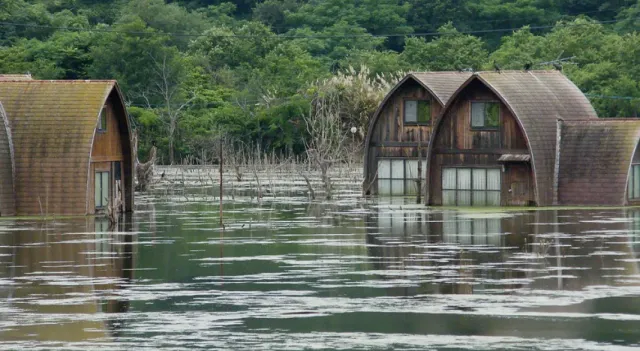
Sydney, July 20, 2025 — A catastrophic wave of flooding tore through eastern Australia on Friday, leaving behind a trail of devastation across northern New South Wales (NSW). Entire towns have been swallowed by rising waters, more than 50,000 people have been cut off from assistance, and at least four lives have been lost in what authorities are calling one of the most destructive flood events in recent memory. The floodwaters, driven by days of relentless rainfall and overburdened river systems, have inundated homes, roads, farms, and infrastructure, while emergency services remain overwhelmed. The worst-hit regions, located approximately 400 km north of Sydney, are now grappling with power outages, water shortages, and blocked access routes, with helicopters being used to airdrop essentials into isolated communities. Extent of Damage — Flood Impact Chart Category Estimated Impact Affected People 50,000+ Confirmed Deaths 4 Homes Flooded or Destroyed 12,000+ Roads Washed Out 300+ km Cropland Damaged Over 30,000 hectares Power Outages 20,000+ households Relief Shelters Opened 120+ Emergency Services Deployed 1,500+ personnel Helicopter Rescue Missions 67 sorties as of Friday evening In Lismore, one of the worst-affected towns, residents describe a nightmarish scene of fast-moving floodwaters engulfing homes in minutes.“It happened so quickly. One moment the river was rising, and the next, it was at our windows,” said Patricia Bell, a 68-year-old resident. “We barely made it out with the clothes on our backs.” At makeshift evacuation centers, volunteers are working tirelessly to support displaced families, but supplies are stretched thin. “We need more blankets, food, baby formula — and fast,” said John Tate, a Red Cross coordinator in Grafton. What Caused the Flooding? Meteorologists blame the catastrophe on a slow-moving low-pressure system that dumped relentless rainfall over already saturated catchments. Rivers such as the Clarence, Wilson, and Richmond breached their banks after 48 hours of record rainfall. Experts also cite climate volatility as a key factor, noting that Australia’s eastern seaboard is experiencing more frequent and intense rain events. “These types of floods are no longer ‘once in a century.’ We’re seeing them every few years now,” said Dr. Marnie Callaghan, a climate scientist at the University of Sydney. Government Response & Emergency Measures $250 million relief package for immediate disaster response Mobile medical units deployed to remote and stranded communities Australian Defence Force personnel assisting in evacuations Water treatment facilities on standby to restore clean supply Infrastructure audit to begin next week on all damaged roads and bridges Human Cost and Community Spirit Beyond the statistics lies a deeper story of human suffering and resilience. Children rescued from rooftops, elderly individuals airlifted to safety, and volunteers forming human chains to pull neighbors from danger have become stark images of this disaster. At an evacuation shelter in Ballina, nine-year-old Sienna Murray drew pictures of her flooded home to cope with the trauma. “She doesn’t fully understand what’s happened, but she knows we’re safe,” said her mother, Rachel. International Reaction The floods have drawn international sympathy, with New Zealand, the UK, and the United States offering logistical support and disaster aid coordination if required. Social media platforms are filled with #PrayForNSW and #AustraliaFloods trending globally. Meteorologists warn that more rain is likely next week, compounding the region’s misery. Authorities urge all residents in low-lying areas to remain alert and ready for potential further evacuations. Meanwhile, reconstruction and recovery will take months—if not years. Livelihoods have been destroyed, and rebuilding both homes and hope will require national solidarity “We’ve been knocked down, but we will rise again,” said Mayor Colin Reeves of Lismore. “The spirit of our people is stronger than any flood.” In Summary Eastern Australia is reeling from a natural calamity of immense scale, as record floods devastate communities, separate thousands from help, and trigger a nationwide emergency response. The immediate focus remains on rescue and relief, but questions loom about long-term preparedness and the growing threat of climate-driven disasters. For now, the country watches, waits, and prays — and rallies together to support those left stranded in the wake of the waters.

For the second consecutive day, global stock markets surged, extending a rebound that’s offering investors a much-needed sense of optimism amid a volatile economic landscape. The gains came on the heels of improved economic data, cooling inflation numbers, and rising investor sentiment that central banks could soon begin easing their monetary stance.But what exactly is behind this mini rally? And how long can it last? Here's a breakdown of the key drivers powering the market upswing—and the risks still looming in the background. The S&P 500 climbed 1.3% on Wednesday, while the Dow Jones Industrial Average advanced over 250 points, or 0.7%, closing in the green for the second straight session. The tech-heavy Nasdaq Composite led the way, soaring 1.9% on the back of a strong performance by tech giants like Apple, Microsoft, and Nvidia.European markets mirrored the rally, with the FTSE 100 gaining 1.1% and Germany’s DAX rising 1.6%. Asian indices, including Japan’s Nikkei 225 and Hong Kong’s Hang Seng, also saw notable gains, signaling broad investor confidence. Top Performing Sectors: Technology: Investors returned to high-growth tech names after signs that interest rates may stabilize. Consumer Discretionary: Spending data boosted optimism that consumer demand is still resilient. Financials: Bank shares rose as recession fears eased slightly. One of the biggest tailwinds for this rally is the latest U.S. inflation data. According to the Labor Department, the Consumer Price Index (CPI) rose by just 0.2% in June, lower than the 0.3% expected by analysts. The year-over-year inflation rate dropped to 3.0%, marking the lowest reading in over two years. With the Fed’s July meeting approaching, the softer inflation print could shift expectations toward a more dovish stance—or even a pause in rate hikes altogether. Earnings season is underway, and early results have been encouraging. Several big names, including JPMorgan Chase, PepsiCo, and Delta Airlines, posted stronger-than-expected profits and revenue. PepsiCo raised its full-year guidance after reporting double-digit organic revenue growth. Meanwhile, JPMorgan’s strong loan growth and better-than-expected margins eased fears of a credit crunch in the banking sector. Investor Takeaway: Healthy earnings suggest the corporate sector remains resilient despite macroeconomic headwinds. Forward guidance from companies is also showing cautious optimism, which markets are rewarding. Beijing announced modest stimulus measures to prop up its faltering property sector and consumption. Economic sentiment improved after German industrial production posted a surprise uptick. Crude prices held steady, with Brent trading around $84 per barrel, reflecting both supply concerns and growing expectations of demand recovery. Wall Street analysts are split on whether this rally marks the beginning of a sustained uptrend or just a temporary bounce. Morgan Stanley’s Chief Strategist says the market may be “pricing in a soft landing too early,” warning that corporate earnings might not fully reflect tightening financial conditions. Goldman Sachs, on the other hand, raised its year-end target for the S&P 500, citing “solid labor markets, contained inflation, and stronger-than-expected earnings.” Meanwhile, retail investors have shown renewed interest in equities, with trading volumes on platforms like Robinhood and Fidelity seeing a spike over the past 48 hours. The past two days have given investors something they haven’t had in a while—hope. A combination of cooling inflation, better-than-expected earnings, and easing recession fears has fueled optimism across the board. Yet, as always, the market’s path forward depends on both data and decisions. For now, staying diversified and paying close attention to macro trends remains key. Whether this is the start of a new bull run or just a temporary uptick in a bumpy year, the next few weeks—filled with earnings reports, central bank meetings, and economic data—will provide a clearer picture. Until then, enjoy the rally, but keep your feet on the ground.

In a truly awe-inspiring feat of human endurance, willpower, and national pride, Shakil, born on April 17, 1994, has made history by becoming the youngest and fastest individual to complete the legendary ‘Sea to Summit Everest’ challenge. Over the course of 90 relentless days, he traveled an extraordinary distance of 1,300 kilometers, starting from sea level and pushing onward until he reached the summit of Mount Everest, the highest point on Earth at 8,848.86 meters. This rare expedition, known for its immense physical and psychological demands, requires athletes to endure punishing terrain, extreme altitude, unpredictable weather, and the constant threat of exhaustion or injury. Shakil’s journey wasn't just a personal conquest—it is a symbolic victory for his country, putting it on the global map for adventure and high-altitude achievements. His success reflects grit, precise planning, and relentless preparation, combining long-distance endurance trekking, elite-level climbing, and sheer mental strength. From humid coastal regions, through dense forests and rocky trails, across snow-covered landscapes, and finally to the icy slopes of Everest, Shakil’s accomplishment is nothing short of heroic. Highlights of Shakil's Historic Journey: 1,300 km covered on foot and climb from sea level to Everest’s peak 90 days of non-stop effort, crossing multiple terrain zones Technical climbs, glacial crossings, and high-altitude acclimatization Recognition as the youngest and fastest ‘Sea to Summit Everest’ finisher landmark achievement for his nation, inspiring youth and mountaineers alike This unprecedented triumph now stands as a beacon of inspiration for aspiring adventurers across the world. Shakil’s journey proves that with vision, resilience, and courage, even the most extreme goals are within reach. His legacy will not only be remembered in mountaineering history but will continue to motivate generations to come.

Supporters of BNP leader Ishraque Hossain have announced they will resume their sit-in protest tomorrow (Monday) in front of Nagar Bhaban, demanding what they call an end to political harassment and the immediate withdrawal of "false cases" filed against him. The demonstration is set to begin at 10 AM and comes after a brief pause in protests last week due to heavy rains and mounting police presence around Dhaka South City Corporation headquarters. Organisers say the sit-in will be peaceful but firm in its demands. “We will gather in front of Nagar Bhaban until our leader Ishraque Hossain gets justice,” said Rashedul Alam, a local Jubo Dal leader. “This is not just about one person. This is about the systematic repression of opposition voices in Bangladesh.” Ishraque, a former mayoral candidate from Dhaka South and a vocal critic of the current government, has recently faced a string of legal troubles. His supporters claim that the charges—ranging from unlawful assembly to incitement—are politically motivated and meant to silence dissent. Over the past several weeks, small-scale protests and human chains have been held across the city by BNP activists, demanding an end to what they describe as "state-sponsored targeting" of opposition leaders. Tomorrow’s sit-in is expected to draw a larger crowd. “We will bring our voices to the heart of the city,” said Nasima Akhter, one of the organisers. “We will not be intimidated.” Authorities, meanwhile, have warned against any attempt to “disrupt public order”. A senior police official, speaking on condition of anonymity, said that security would be “tight but restrained” and that law enforcement would act only if the protest became violent or blocked public services. Nagar Bhaban, the central office of Dhaka South City Corporation, has become a symbolic venue for the protest, with Ishraque’s supporters claiming that the city’s leadership has been complicit in attempts to push opposition figures out of public life. As of Sunday evening, no additional barricades or police deployments were visible around the area, but sources suggest law enforcement is on alert. The BNP has not made any official comment yet regarding the planned sit-in, though several senior leaders have privately expressed concern over possible clashes. For now, the eyes of Dhaka remain on Nagar Bhaban, as another round of political tension unfolds in the heart of the capital.

Key services of the Dhaka South City Corporation (DSCC) have come to a grinding halt as supporters of BNP leader Ishraque Hossain continue their prolonged sit-in protest in front of Nagar Bhaban for the third consecutive day. From garbage collection to public grievance handling and daily administrative functions—most essential services under the DSCC have been severely disrupted since the protest began early Saturday. Long queues of citizens seeking various services were seen returning home in frustration as access to the main building remains blocked. “This is the third time I’ve come to submit a tax application,” said Mohammad Anwar, a resident of Azimpur. “The gates are locked, and no one is helping us. The protestors say it’s not their fault, but the staff say they can’t enter due to safety concerns.” Hundreds of Ishraque’s supporters, waving placards and chanting slogans, have surrounded Nagar Bhaban since the weekend. They are demanding the withdrawal of what they call "politically motivated" cases against the former mayoral candidate and calling for an end to harassment of opposition leaders. “We will not move until our leader gets justice,” said Tania Rahman, a member of the BNP-affiliated Mohila Dal. “If that means the city corporation suffers, so be it. This is a fight for democracy.” Inside sources from the DSCC said many staff members have been instructed to work remotely, while others have been unofficially advised to avoid the area due to fear of escalation. DSCC Mayor Sheikh Fazle Noor Taposh has yet to make a public appearance regarding the situation, though a spokesperson said efforts are underway to negotiate with protestors to clear access for city workers. “We understand the right to protest, but public services cannot be hostage to politics,” the spokesperson said. Meanwhile, the piling garbage in parts of Old Dhaka has sparked health concerns. “The roads are dirty, the bins are overflowing, and no one is coming to clean,” said shopkeeper Shahadat Hossain in Lalbagh. “If this continues for another two days, we will face a sanitation crisis.” Police have remained present but non-interventionist, citing fears of escalation if force is used to disperse the crowd. Senior officers say they are monitoring the situation closely and are in contact with both DSCC officials and protest leaders. As the stand-off enters a critical phase, residents and workers are left to cope with growing frustration. The question now is how long the city can afford this disruption before either side yields—or the situation spirals out of control.
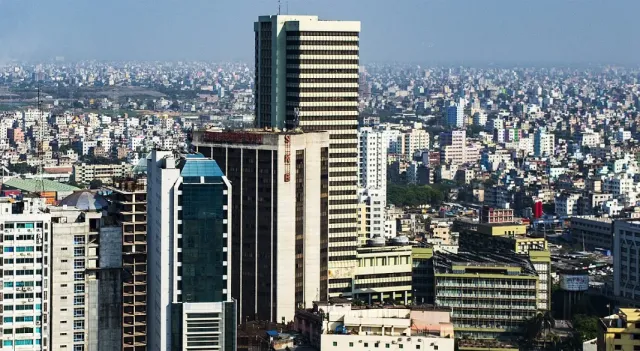
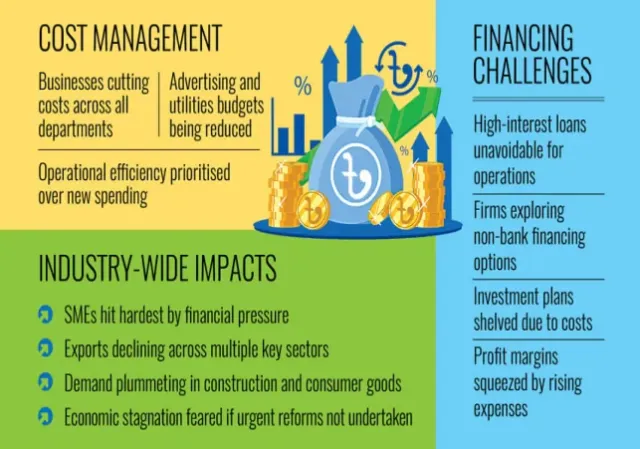
Across the streets of Dhaka and in the pages of once ad-heavy newspapers, a noticeable silence is growing. Billboard spaces remain vacant, newspapers carry fewer colorful full-page ads, and television commercial slots—once crowded with promotional buzz—now often revert to filler programming. The reason: businesses, from manufacturers of mild steel rods to suppliers of everyday food items and consumer electronics, are cutting back on advertising budgets in an effort to survive the growing pressure of economic strain. This pullback signals a deep unease in Bangladesh’s business landscape, where companies are grappling with a confluence of challenges—persistently high inflation, a rapidly depreciating taka, and prohibitively steep bank interest rates—all contributing to an uncertain investment climate. Inflation and Devaluation Fuel the Fire Inflation has been gnawing at consumer purchasing power for months, pushing up the costs of basic goods and eroding profit margins. Even essential items like rice, lentils, cooking oil, and electricity have seen repeated price hikes, forcing families to stretch budgets thinner each month. For businesses, this spells reduced consumer demand, lower sales, and an urgent need to scale back non-essential expenditures—advertising being one of the first casualties.Compounding the problem is the devaluation of the Bangladeshi taka. Over the past year, the local currency has depreciated sharply against the US dollar, making imported raw materials more expensive. For companies dependent on global supply chains, such as electronics retailers or FMCG producers, the cost of production has soared. Rather than absorbing the loss or passing on full costs to customers—who are already reeling from inflation—many businesses are suspending their marketing activities altogether to shore up internal finances. Bank Interest Rates Hit New Heights As part of the government’s strategy to control inflation, the central bank has raised policy interest rates, which has led commercial bank lending rates to spike significantly—often exceeding 13–14%. For businesses, especially small and medium-sized enterprises (SMEs), this has made accessing working capital extremely expensive. Traditional marketing strategies, once considered vital to brand survival and growth, are now seen as luxuries in such a tight credit environment. Instead, businesses are redirecting funds toward managing overheads, servicing debt, or simply staying afloat. As a result, even during major commercial seasons like Eid-ul-Adha and Puja, the volume of advertising—especially print and broadcast—has dropped to levels not seen in over a decade. The Fall in Traditional Media Revenues The cutbacks are taking a toll on the country’s already fragile media ecosystem. Major newspapers and television channels, which rely heavily on corporate advertising for revenue, are seeing their income streams dry up. In the past, a single retail giant or steel conglomerate could purchase several pages of print advertising in a week. Today, media houses are seeing only a fraction of that volume. "This Ramadan, we expected a boost in ad bookings—but it never came," lamented a senior executive at a leading national daily. "Our revenue from advertisements has dropped by nearly 40% compared to the same period last year." For television networks, it's even more concerning. Prime-time slots that would once command top prices from brands promoting mobile phones, detergents, and packaged snacks are now filled with reruns and minimal ad placements. Shifting Focus to Digital, But Slowly Some companies are pivoting toward more cost-effective digital platforms such as Facebook, YouTube, and Google Ads. These platforms allow brands to target specific demographics with smaller budgets, tracking every impression and click. However, not all businesses are agile enough to make this transition, and many still lack the expertise or confidence in digital ROI. “There is interest in digital advertising, especially among the younger brands,” says Nadia Khan, a digital media consultant based in Dhaka. “But budget constraints are limiting even those moves. Many are just pausing all marketing altogether and waiting for more economic stability.” Moreover, digital campaigns may offer reach but can’t replace the credibility or mass impact that traditional platforms like television and newspapers provide—especially in rural or semi-urban areas where internet penetration remains inconsistent. Industry Examples and Sectoral Effects The impact spans across various sectors. In the steel and construction industry, for example, manufacturers of mild steel rods and cement have scaled down promotional activities due to a construction slowdown. Many infrastructure projects are stalled due to lack of funding, and private developers are holding back due to high interest rates on loans. In the fast-moving consumer goods (FMCG) industry, companies producing snacks, bottled beverages, personal hygiene products, and household items have shifted focus toward trade promotions—targeting retailers with direct incentives instead of consumers through ads. Retail electronics has been another major casualty. With prices of imported electronics rising sharply and middle-class purchasing power declining, major brands like Walton, Samsung, and Sony have reduced television and newspaper ads in favor of showroom-level discounts and minimal social media announcements. Even telecom operators—once among the top five advertising spenders in the country—are pulling back. An executive from a top telecom company mentioned, "We're being forced to prioritize core network expansion and subscriber retention over flashy marketing campaigns." Long-Term Implications The ongoing cutbacks in advertising reflect more than just cautious accounting—they signal a broader erosion of business confidence. Prolonged reduction in brand visibility can harm long-term customer loyalty and market share, particularly in competitive sectors. If the current trends continue, industry experts warn of a “brand vacuum,” where even once-dominant names lose relevance due to lack of visibility. For the media industry, the risks are existential. Journalists, production staff, and editors are already facing job insecurity, delayed salaries, and increased workloads. Smaller media houses may be forced to downsize or shut operations altogether if advertising does not recover soon. Looking Ahead There are faint glimmers of hope. The government has signaled that it may look into monetary adjustments later in the fiscal year, potentially lowering interest rates if inflation shows consistent signs of easing. Some banks are also starting to offer sector-specific lending packages at slightly reduced rates, particularly for exporters and manufacturers. Meanwhile, the upcoming fiscal budget may include measures aimed at boosting investor confidence, easing import bottlenecks, and expanding support for small businesses—developments that, if executed efficiently, could help restore the advertising ecosystem. However, industry players agree that a full recovery may still be many months away. Until inflation is under control, the currency stabilizes, and banks offer more accessible credit, most businesses are likely to remain cautious about spending on brand-building. Conclusion: The current lull in Bangladesh’s advertising scene is not just a reflection of corporate thrift but a mirror to a larger economic narrative. Businesses are in survival mode, consumers are cautious, and the media is gasping for breath. Advertising, long considered the engine of consumer economies, has now become a luxury for many. And unless broader macroeconomic challenges are addressed, this advertising drought could leave a long-lasting imprint on the country’s economic and cultural fabric.

The recent arrest of popular Bangladeshi actress and singer Nusraat Faria has sparked widespread public attention, prompting a high-level response from the cultural sector. A senior adviser to the Ministry of Cultural Affairs has called the arrest “deeply concerning”, citing its potential impact on the country's artistic freedom and global reputation. Faria, known for her roles in both Bangladeshi and Indian films, was reportedly detained late Friday night under circumstances that remain unclear. According to Dhaka Metropolitan Police sources, she was taken into custody following a complaint linked to "public order concerns" at a private event. No formal charges have yet been filed. In a statement issued Saturday morning, the cultural affairs adviser, speaking on condition of anonymity, said: “Nusraat Faria is not just an entertainer—she is a cultural ambassador who has represented Bangladesh across borders. Her sudden arrest raises questions and concerns that must be addressed with transparency.” The adviser further emphasised the need for due process, warning that such incidents could damage the image of Bangladesh’s cultural sector internationally. “We must be careful not to send the wrong message to artists, especially women, who are working hard to elevate our creative industries,” the adviser added. Faria’s legal team has remained tight-lipped but confirmed they are preparing to challenge the legality of her detention in court. “We believe this is a gross overreach and intend to pursue all legal remedies,” her lawyer told reporters outside the courthouse. Social media has exploded with reactions, with hashtags like #FreeFaria and #JusticeForNusraat trending across platforms. Many fans and fellow celebrities have expressed outrage and demanded an explanation from the authorities. The Ministry of Cultural Affairs has not released an official statement, but sources suggest a review of the arrest is underway. As the case unfolds, public pressure continues to mount on law enforcement and government officials to clarify the grounds of Faria’s detention and ensure her rights are upheld.
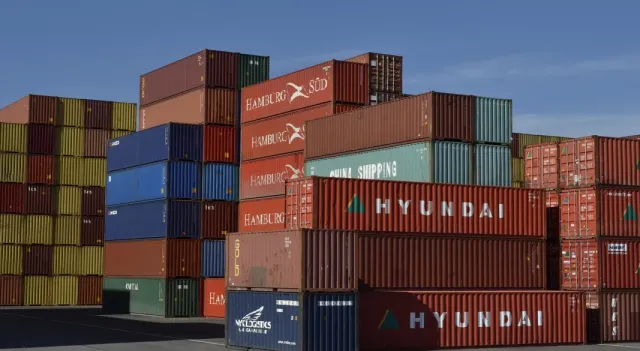
In a situation that escalated into a major logistical crisis, hundreds — possibly over a thousand — trucks carrying India-bound goods were either stranded for long hours or turned away without unloading their cargo at multiple land ports across Bangladesh. The affected border points included Benapole, Burimari, Bhomra, Hili, Akhaura, and Sonamasjid, among others. These trucks had been waiting in queue for clearance, only to face confusion, delays, and in many cases, forced return without explanation. This sudden breakdown in port operations has raised alarms across the trading community. Exporters and Freight Operators Facing Mounting Economic Fallout The economic cost of the disruption has been immediate and severe. Exporters, many of whom operate on tight schedules, reported contracts being delayed, perishable goods nearing spoilage, and logistics costs surging. Small and medium-scale traders are especially vulnerable, with some reporting losses of lakhs of taka per shipment. Freight companies have also decried the lack of information and planning, as they lose revenue on idle transport, incur fuel and labor costs, and face penalties for late deliveries on both sides of the border. Absence of Clear Directives from Authorities Fuels Frustration and Speculation Adding to the chaos is the near-total silence from port and customs authorities. No formal statements were issued to explain the disruption, leading to speculation among drivers, transporters, and business owners. Some unofficial sources attributed the jam to technical faults in the customs software, shortages of port staff, or changes in clearance protocols, but these remain unconfirmed. The lack of transparency has left stakeholders in a state of panic, confusion, and rising anger. Bilateral Trade Between Bangladesh and India Suffers Another Blow This incident marks yet another challenge in the already fragile Bangladesh-India trade infrastructure, where efficiency and predictability are often compromised by poor coordination. Indian buyers have voiced concerns over the "unreliable nature" of port operations on the Bangladeshi side, while Bangladeshi exporters warn that such delays undermine trust in future trade agreements. With annual bilateral trade worth billions of dollars, stakeholders fear that repetitive disruptions could result in a shift of business to alternative routes or suppliers. Businesses Demand Urgent Reform and Government-Level Intervention As frustration boils over, national trade bodies such as the Bangladesh Truck-Covered Van Owners Association, and the Exporters’ Association of Bangladesh, have called for immediate government action. Their demands include: Deployment of emergency clearance teams at border ports Digitization of customs operations to reduce delays Creation of a real-time port status monitoring system Better bilateral coordination mechanisms with Indian port authorities Investment in modernizing land port infrastructure to handle high volumes efficiently Without a structured, long-term solution, business leaders warn that this disruption is just a preview of more severe economic consequences to come, particularly as Bangladesh aims to expand its export base and attract more regional trade.
As soon as he hears the news of someone's death, he rushes to the graveyard on horseback with his required tools. Like a special companion on the final journey of a person, the 67-year-old extends his sincere hands. In a heartbreaking twist of fate, the faithful companion of gravedigger Manu Mia was killed yesterday, while Manu himself remains hospitalised, battling for his life. The 65-year-old Manu Mia, a familiar figure in the community for over four decades, has long been known for his humble service digging graves and transporting bodies in his modest wooden cart, drawn by his beloved horse, Shonar Pakhi. Residents say the bond between Manu and the gentle brown mare was unlike any they had seen—a relationship forged through hardship, routine, and deep affection. Manu was admitted to the hospital last week following complications from a respiratory illness. “He kept asking about the horse even from the hospital bed,” said his nephew, Rafique Mia. “He didn’t want her left alone.” Tragedy struck yesterday morning when Shonar Pakhi was struck and fatally injured by a speeding motorbike near the village graveyard. Witnesses said the horse had broken loose from her makeshift rope tether and was calmly walking toward the graveyard entrance, perhaps out of instinct. “She was not just a horse; she was family,” said Rahima Begum, a long-time neighbour. “That animal had pulled hundreds of funeral carts, always steady, always calm. To see her die like this, without her owner even knowing yet—it’s just too much.” The rider of the motorbike fled the scene, and police say they are investigating the hit-and-run incident. So far, no arrests have been made. News of the horse’s death has not yet been shared with Manu, who remains in critical but stable condition. Family members are struggling with how to break the devastating news. Locals have expressed shock and sorrow, with many calling for better enforcement of road safety rules in the area. A small vigil was held near the graveyard last night, where residents lit candles and shared memories of the old gravedigger and his loyal horse. “Manu Mia’s work was never glamorous, but he did it with dignity,” said Abdul Karim, a community elder. “Now, while he fights for his life, he has lost the only creature who stood by him through every sorrowful journey. It’s a tragic chapter in a quiet man’s life.”

Paris Fashion Week 2025 has concluded with a powerful message to the global fashion industry: sustainability, cultural diversity, and innovation are no longer optional but essential. This year’s event, held at the iconic Grand Palais, brought together designers, models, and fashion enthusiasts from around the world to witness a significant shift in creative direction. One of the most notable highlights of this year’s shows was the overwhelming emphasis on eco-conscious fashion. Leading brands such as Dior, Balenciaga, and Stella McCartney introduced collections made entirely from sustainable materials. Stella McCartney, known for her commitment to ethical fashion, showcased garments made from plant-based leather alternatives, recycled fabrics, and organic textiles. She remarked during her post-show conference that “sustainability is no longer just a concept; it is the future of fashion.” In addition to environmental responsibility, cultural representation was strongly present throughout the event. Designers from various regions, including Africa, South Asia, and Latin America, infused their collections with traditional elements. Indian designer Anita Kumar received widespread praise for her contemporary interpretation of the sari, incorporating digital embroidery and minimalistic draping. Nigerian label Ogechi blended bold Ankara prints with modern streetwear cuts, making a statement about heritage and identity in the modern world. Technology also played a significant role this year. Several designers experimented with smart fabrics, augmented reality (AR) experiences, and even garments that change color or shape based on environmental conditions. One of the most talked-about presentations was a 3D-printed dress that moved in sync with music, creating an immersive experience that quickly went viral on social media platforms. Inclusivity was another key theme. The runways featured models of all body types, genders, and ethnic backgrounds. Many praised this year’s fashion week for finally representing a more realistic and diverse image of beauty that resonates with audiences worldwide. Paris Fashion Week 2025 has set a new benchmark, reminding the industry that fashion is not only about aesthetics but also about responsibility, technology, and authenticity. As buyers and critics return home, the global industry is left with a clear message: the future of fashion is sustainable, inclusive, and culturally rich.

Dhaka, July 1, 2025 — In a major political development, Prime Minister Sheikh Amin announced a cabinet reshuffle today, appointing five new ministers and reassigning key portfolios in what officials say is a move to accelerate ongoing economic reforms. The Finance Ministry will now be led by veteran economist Dr. Rezaul Karim, while the Ministry of Commerce goes to rising political figure Nasima Haque, marking a notable generational shift in leadership. The reshuffle comes amid public pressure for stronger governance, job creation, and inflation control. Opposition parties have criticized the move, calling it "cosmetic," while analysts suggest it signals a strategic repositioning ahead of the 2026 general elections. The Prime Minister emphasized that the changes aim to "prioritize accountability, efficiency, and public service delivery." Cabinet members are expected to take oath at the Presidential Palace tomorrow morning.